DEVELOPMENT – TRACKWORK (STEP 1.2.1) – Page 2
|
|
Page 1
|
|
|
Page 2
|
|
|
Page 3
|
|
|
Page 4
|
|
|
Page 5
|
|
|
Main development page
|
|
|
HOME
|
|
|
|
Trackwork (uploaded 2 November 2008 )
After the
exploits described on Page 1, we were relieved to see the track again. We knew it would be bad – but not that bad, and
after the defoliation exercise we soon realised that those few sleepers that
had not been pickled in the peaty acid water, were completely rotten. We liked wooden sleepers, they were
traditional and relatively easy to handle.
But concrete was rot-proof and effectively maintenance free, but they
were brutal and heavy, and had absolutely no heritage appeal. To a large extent the problems were not only
due to vegetation but neglect of the drains and waterways, which had all
conspired to damage the track and trackbed, and which will be needing
substantial attention and improvements over the next few years. Nevertheless we realised that with such a
programme of development ahead of us we could not spend too much time on
maintenance. So, after some extended,
and occasionally heated, discussion we settled on concrete sleepers, except for
areas in stations, where visual appearance would be important, on points and
crossings which traditionally use hardwood timbers, and in one or two other
special areas.
Pressure to get
started was significant, and so, at the end of June 2008, we made a faltering
start below Bridge 14 (New Pit Road bridge).
The embankment here is very narrow and it was felt that we would have
insufficient room to manoeuvre plant –which we didn’t have at the time anyway,
so woods were specified and installed
|
|
|
|
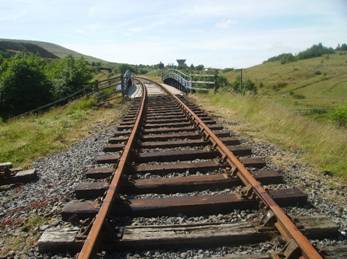
The last week of June saw a start made on
replacing wood for wood sleepers just south of Bridge 14 (new Pit Road
bridge)
Pict1476 – 29 Jun 08
|
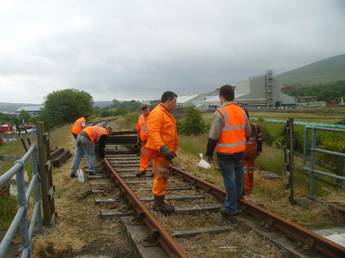
The complete team was available only every two
weeks and work pottered on till early August, by which time three panels had
been replaced. Here the first of the
three is seen, looking north.
Pict1486 – 30 Jun 08
|
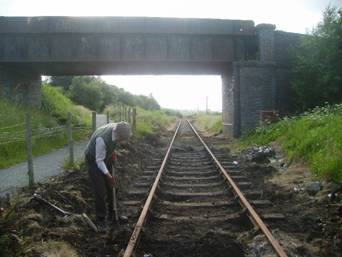
Meanwhile volunteer Charles was, single handedly
clearing the ballast from north of Bridge 18 (Forgeside Rd. bridge) By the
time this picture was taken he had passed under the bridge and is seen
working away going south away from the bridge
Pict1484 – 30 June 08
|
A concrete sleeper
weighs about 350 lbs, and with chairs is best part of a hundredweight more, so
manual handling really was not an option.
So, using HoV money we went out and bought a rather special second-hand
3-ton minidigger, which would not only dig conventionally, but, with the aid of
a jointed so-called ‘knuckle arm’ could dig alongside itself with the bucket
still parallel to the cab. However
within a week, one of its tracks, which was well on the way out when we bought
the machine, failed, and had to be replaced. By the time this was fixed and the
final flurry of events which typified our 2008 season had finished it was early
October, and the first sleeper drops were on 4 October. The team soon learnt that the business of
collecting sleepers together, loading them onto the train, and offloading them
where they were going to be needed was a job in itself, and over the next few
weeks they significantly improved their technique, and this made the work both
safer and more effective
|
|
|
|
Here we see our Weltrol wagon being loaded with
sleepers. The mididigger is lashed to
the wagon and picks up sleepers from the side of the wagon. Delivering the sleepers to the side of the
wagon is our Manitou which collects the sleepers from various caches on site
|
Best part of a mile down the line the job of
carefully dropping the sleepers on a one for one basis opposite the wooden
sleeper to be renewed takes place. This used to take about 2-3 minutes per
sleeper but the drop time is now little more than a minute.
|
Here is the job in close up. The job has been much improved since we now
use purpose built lifting chains with proper chair hooks at their ends, in
preference to conventional terylene slings which we felt we not entirely
adequate.
|
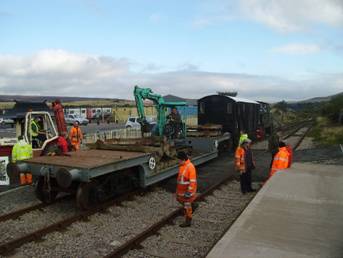
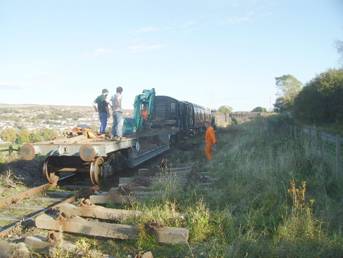
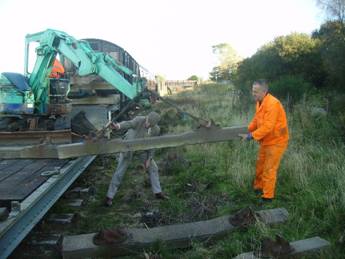
For no
particularly well planned reason, re-laying has fallen into a series of
‘campaigns’ identified by the two letter code that identifies the northern most
panel of track. Here we see work in
progress on the first campaign – Campaign ‘OO’ – probably panel OR or OS, on 2
November 2008.
|
|
|
|
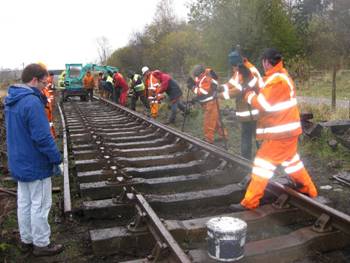
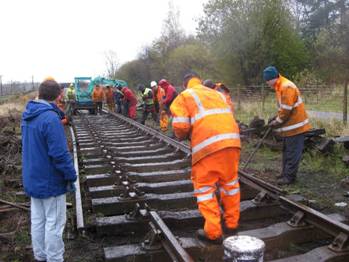
‘Many hands make light work’ or ‘ant power’ at its
best. With a volunteer team large
enough to put larger railways to shame, a rail is dropped back into its
chairs
|
‘Altogether now’.
This is heavy work in cold and damp conditions, and at any one time it
is unwise to use everyone in the team – some need to be rested if they are to
fit the following day
|
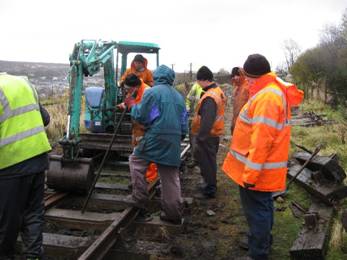
The minidigger makes light work of dropping
concrete sleepers into the beds vacated by wooden sleepers a few minutes
before.
|
|
|
|
|
Still raw, but with concretes in place, looking
south to Forgeside Bridge. On the left
the coal bunker and hut belonging to Tyre Mill Siding signal box. The box itself has long gone
|
Although difficult to see in the previous view,
this view looking north is half way along a reverse curve. Note the alignment pegs to ensure it all
goes back accurately, concretes lie on the left ready to replace the woods.
|
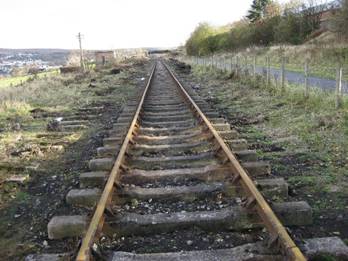
Yet further south towards Forgeside Bridge, a
length of concretes laid before preservation stretches under Forgeside Road
bridge. Although now cut back,
vegetation grows more profusely between concrete sleepers, due, perhaps to
the lack of creosote.
|
|
|
|
|
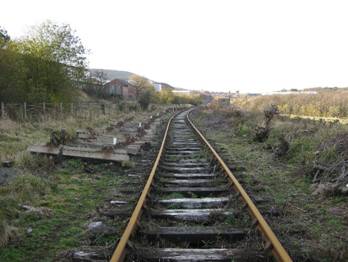
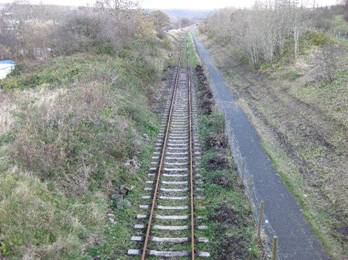
Viewed south from Forgeside Bridge, this is
cleared concrete track – cleared by just one volunteer. Compare this image, with the penultimate
image on the previous page.
|
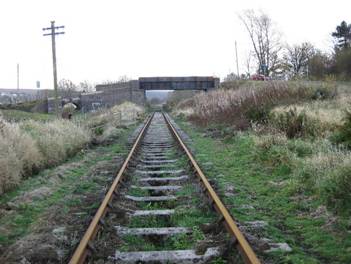
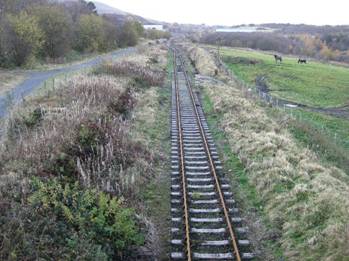
Looking north from the same bridge, we see further
cleared concrete track – again the work of the same volunteer.
|
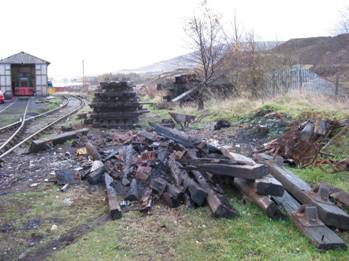
Most old sleepers are condemned to the fire with
little further ado, those precious few just about good enough for re-use in
sidings are retained. Smoke still
drifts from the conflagration of the previous day.
|
|
|
Page 1
|
|
|
Page 2
|
|
|
Page 3
|
|
|
Page 4
|
|
|
Page 5
|
|
|
Main development page
|
|
|
HOME
|
|
|
|