DEVELOPMENT – TOP SHED EXTENSION
(STEP 1.6)
Top shed extension (uploaded 13
October 2009 )
This work is
different from the current surge of development work, in that it is not
externally funded, but funded from ticket revenue and members’ donations. It can only progress when lulls in the HoV
funded development work conspire to release a body or two, or an hour or
two. Despite these limitations, slow
progress is being made, driven by the need to get more of our engines and
carriages under cover – and the volunteers who have had to work exposed to the
wind and rain. All railways have a
requirement for decent accommodation. At
1200 feet up a mountainside it becomes imperative.
|
|
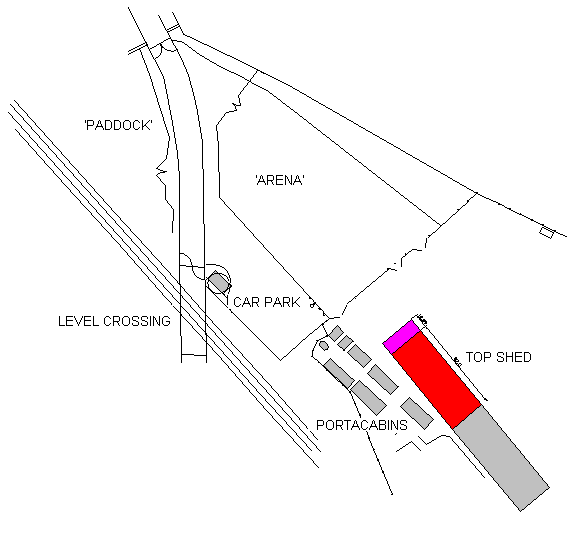
Left: The diagram of the left
shows the situation when the Top Shed was first mooted. The original extent of the Top Shed is
shown in grey. It was originally
planned to extend the shed roughly northwards by some 88 feet, and this is
shown in red.
Examination of the component parts soon showed
that it would be possible to extend the shed by another twelve feet, to bring
the overall extension to 100 feet – this is shown in magenta. Since the original shed was 97 feet long,
the extension will more than double the length of the shed. This is particularly useful. A BR Mark 1 coach is about 65feet long.
Hitherto, on either of the two lines into the shed, it was possible to store
only one such coach and perhaps a wagon or very small loco. It will soon be possible to squeeze in
three coaches on each line.
The various small grey structures represent ‘
|
Although the
number of images will increase shortly.
We present just one to get this page started
|
|
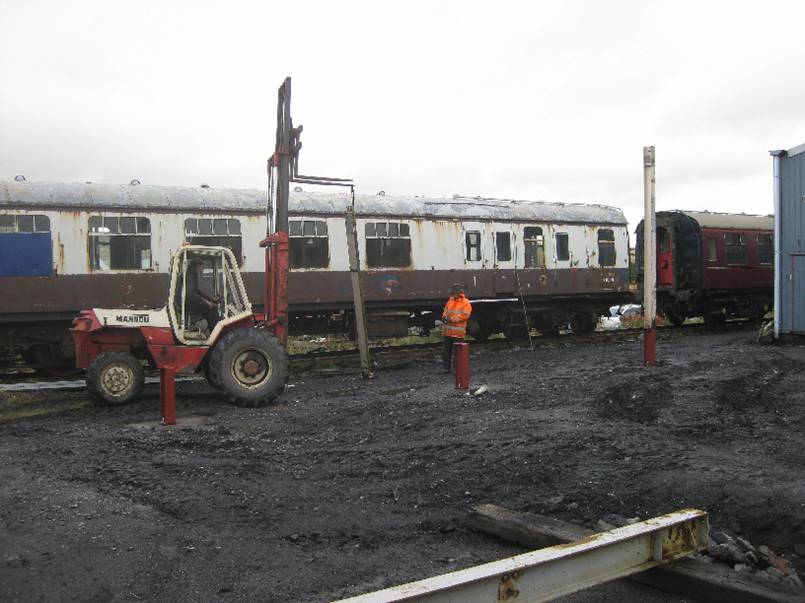
Left: Although the shed will be extended backwards
by about 100 feet, in order to even out the requirements for cash, the
extension backwards will be undertaken in two chunks. Here the side wall stanchions are receiving
attention. Three 1m cubes of concrete
form the bases for each of the three stanchions. In order to maintain the same profile as
the original shed the stanchions have had to be extended, and for this
purpose three stubs (in red oxide paint) have been bolted into the concrete.
The stanchions are bolted on top of the extension stubs, and the second one
is seen been lifted into place using the Manitou all-terrain fork truck. In the back ground lies BR Mark 1 BCK No21034. This vehicle has seen some work, but has
been ousted in favour of other more important jobs, and is now forced to wait
its turn in the restoration queue 0379 – 11 Oct 09 |
Progress
(uploaded
With fabrication, and in particular, welding, on the
Hinckley footbridge made difficult by a prolonged spell of wet and windy
weather throughout late October and early November, our small fabrication team
turned their attention to the extension to the top shed. The need to get our coaching stock under
cover, and the general shortage of facilities for working on rolling stock has
made the top shed extension very desirable.
|
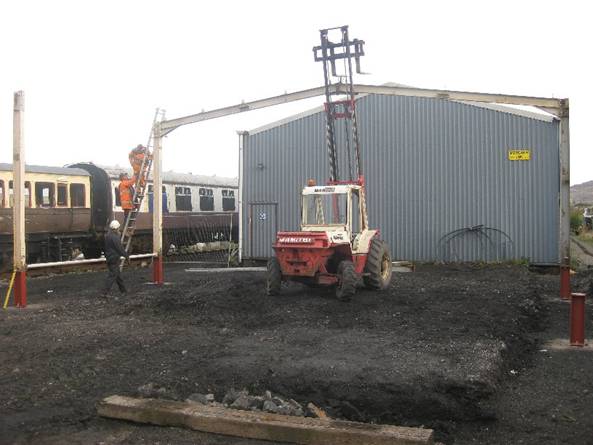
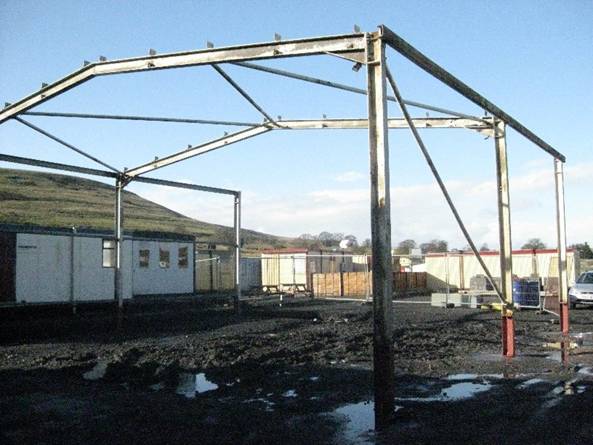
Looking
south, and with three stanchions up, strong winds endangered the unsupported
structures, so in a brief quiet period, the opportunity was taken to attach
one of the cross trusses. Here the
Manitou is at full stretch holding the truss in position on one of its forks 0415 – 18 Oct 09 |
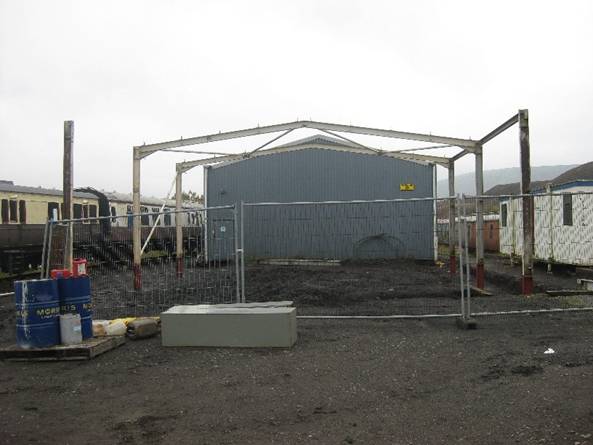
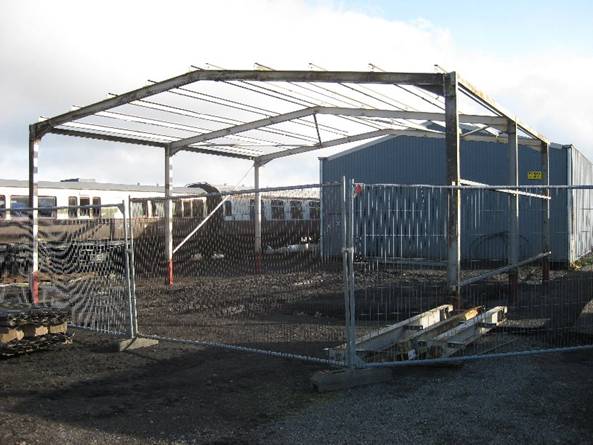
A week
later, and still looking south, the
second span was up and the diagonal braces in position – and two more
stanchions were ready to accept the third truss. 0473 – 29 Oct 09 |
|
We look
generally north this time, another week has passed, and here we see that the
side nearest the camera has received its cantrail. 0567 - 3 Nov 09 |
Four weeks
after bolting in the first stanchion, the sheet rails are fitted across the
trusses, ready to receive the roof sheets.
On the west side, two sheet rails have also been fitted 0576 – 9 Nov 09 |
Another
year goes by…. (uploaded
|
Whilst 2010 has been a monumental year for
progress on the railway, not all developmental projects have made such rapid progress. The extension to the top shed has been a
case in point.. We noted in the first paragraph that external funding was not
available to support this work, but barely a month later, a modified funding
stream from the HoV people permitted some modest redeployment of funds, where
circumstances would allow. All our
development projects are essential, but some are more essential than others
(to misquote ‘Animal Farm’), and it was some months before ‘circumstances would
allow’ progress on the top shed extension.
There was also the problem of labour, and our modest fabrication team
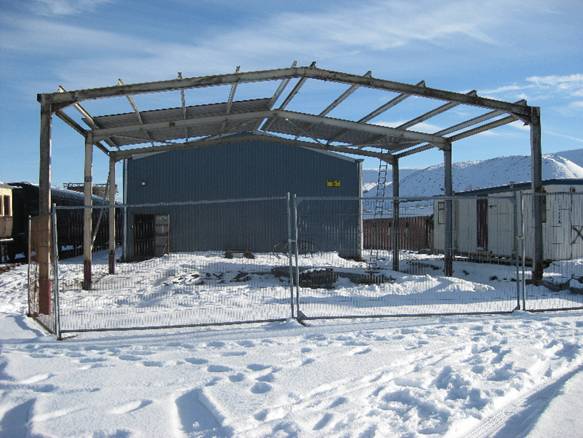
was too busy on the Right: Three bays, and three stanchions on each side are up, and since
mid-November 2009, this image, taken in the snow of 21 February 2010, shows
that during the intervening three months or so, it has only been possible to
instal a few of the roof sheets. The
winter weather was a major impediment, not only to this, but to all
development projects on the railway. |
0924 – |
|
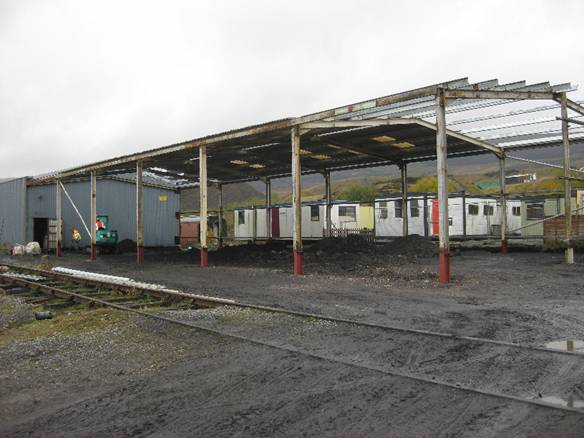
There has
been steady progress in the since months since February, and this image shows
that the number of stanchions has increased to six each side. In the background glimpses of the
re-arranged ‘portacabin city’ can be glimpsed, with the model railway
‘horseshoe’ dominating. 7111 – |
Taken from
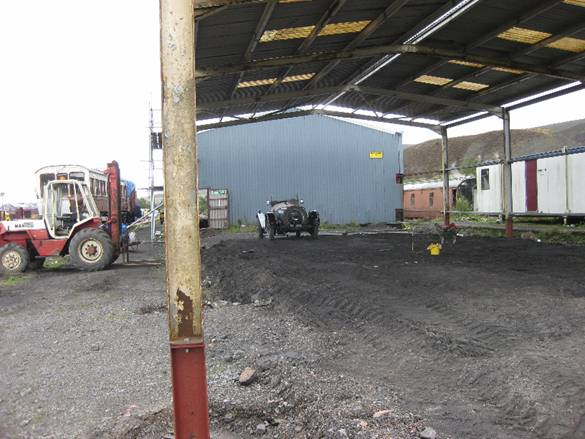
the fifth stanchion (the apparent loss of plumb is due to the cameraman),
some idea of the cavernous nature of the extension can be realised. In the background, one of our members’
vintage Bentley can be seen – an important player in the forthcoming
photocharter. 7112 – |
|
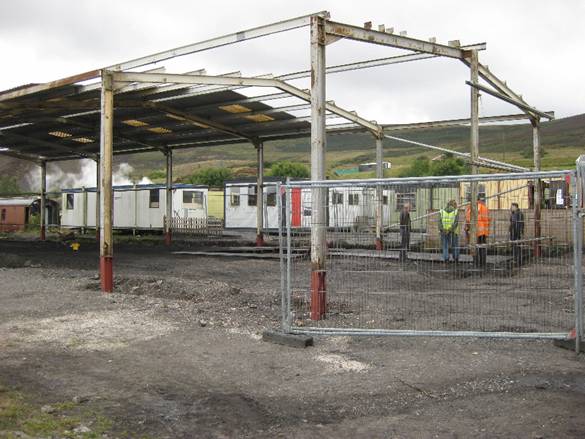
This image,
taken a week later than the previous image, shows some modest progress on the
roof sheeting. The central stanchion
at the end confirms that this is the end of the shed. 7752 – |
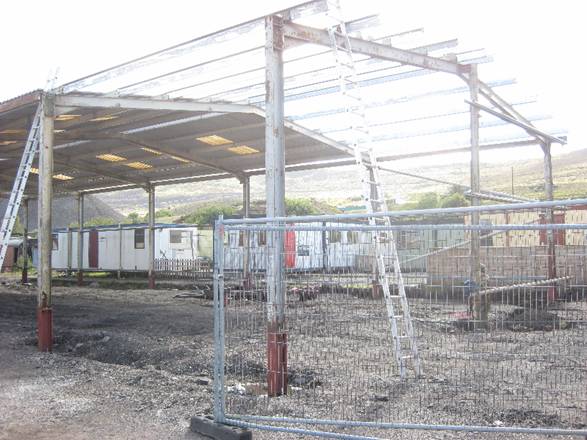
Taken on
the same day as the previous image, work on installation of the ‘zero-th’
stanchion, that is to say, the stanchion that abuts the original shed, is
being put into place. 7754 – |
|
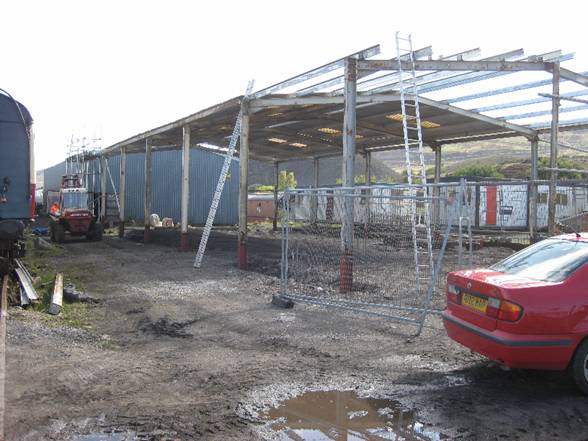
There are
now seven stanchions per side, enclosing six bays, each of around 13ft
wide. In the background, it can be
seen that the zero-th arch is now in place.
Eagle eyed viewers will see that the ground had been disturbed. In order to extend track from the original
shed, the mean height of the ground had to be reduced by about a foot. This suggests a total volume of about 170
cubic yards would need to be removed 7791 - |
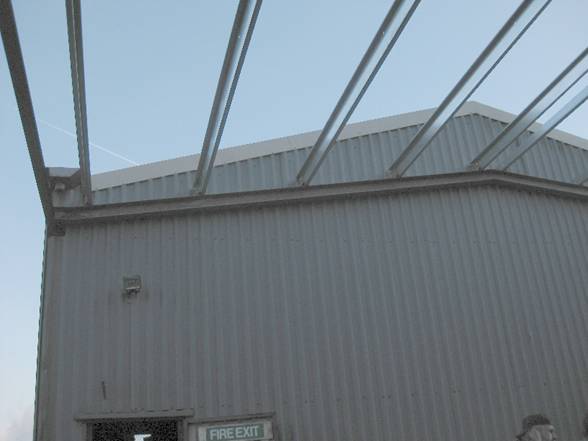
A close up
of the zero-th arch. The cross-section
of the arch is very different from that of the original shed, so elaborate
means of sealing the two with suitable flashing, and means of dealing with
rainwater must be found, before most of the existing sheeting at the end of
the original shed is removed. 7797- |
Three
weeks progress (uploaded
Despite heavy rain in early November, and a hiatus
in the ordering of further sheeting, good progress has been made on the top
shed extension, as the images below demonstrate…
|
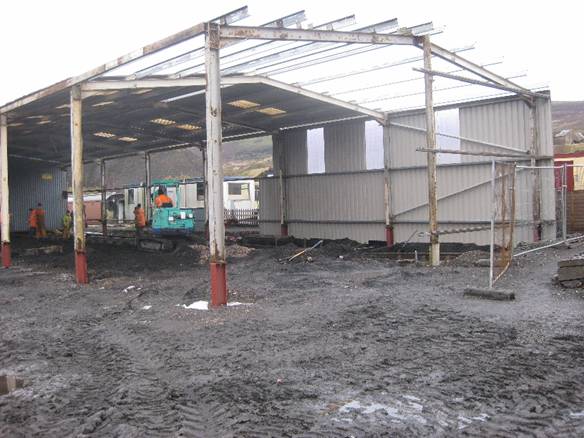
An overall
view looking south-west, shows that whilst bay 6 roof sheeting remains
outstanding, the roof sheets which abut the existing shed, that is, bay 1,
have now been installed. A start has
been made on the side sheeting on the west side, on bays 5 and 6, and it looks as if bay 4 is underway 7798 - 21 Nov 2010 |
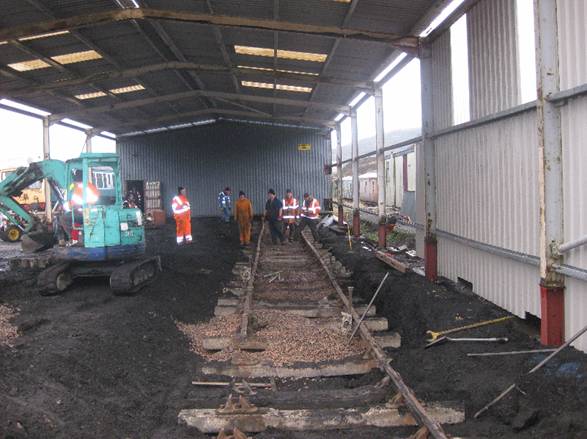
Inside
material has been removed, and the track laid within. It is constructed from concrete sleepers
unsuitable for use on the main line, and from relatively short lengths of
rail which fell out of the extension program when much rail was
replaced. This all helps to keep costs
low. 7800- |
|
Another
view looking south east. Since PBR is
now in its off-season, more bodies are available, and the fabrication team
get help from PWay team and the New Works team. If this all sounds terribly well organised,
be assured it isn’t, it’s simply that volunteers will pitch in wherever
required. 7801 - |
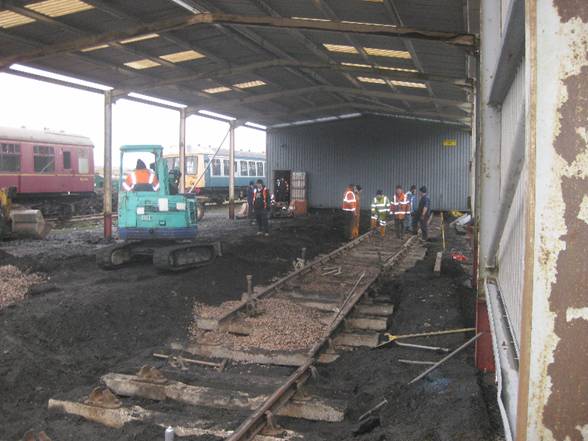
Here is the
view looking north. Early winter snow
is forecast, and it would be useful to get the west wall completed before
much longer to protect the workforce from the bitingly cold winds which
prevail during the winter. It almost
looks quite cosy by Blaenavon standards. 7802- 21 Nov 2010 |
A
week later (uploaded
Good progress is being made on cladding the Top Shed
extension. In failing light on a
winter’s day, these can hardly be judged to be sparkling shots, but they
nevertheless show just how much work has been done since last week.
|
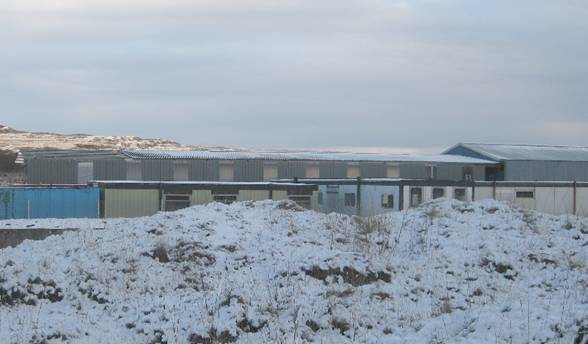
The west
side of the Top Shed extension is not easy to see, hemmed in as it is by
‘portacabin city’. Even then the
photographer needs to be a long way back if the extension’s impressive length
is to be fully encompassed. 7805 – |
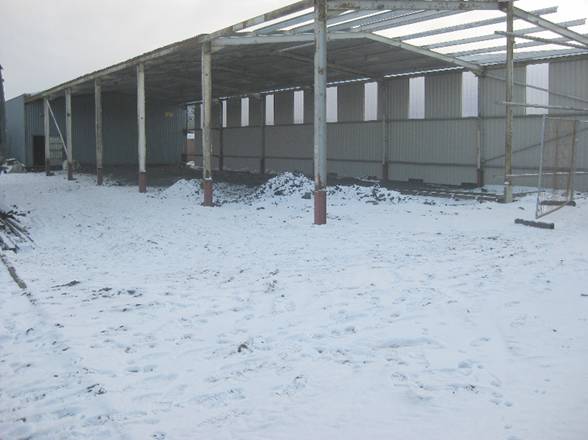
A general
view from the north-east corner shows that work on fixing the cladding on the
west side has progressed well.
Unfortunately, the recent snow has blown in from the east, so
hopefully it won’t be too long before the cladding on the east side is fixed. 7809 – |
|
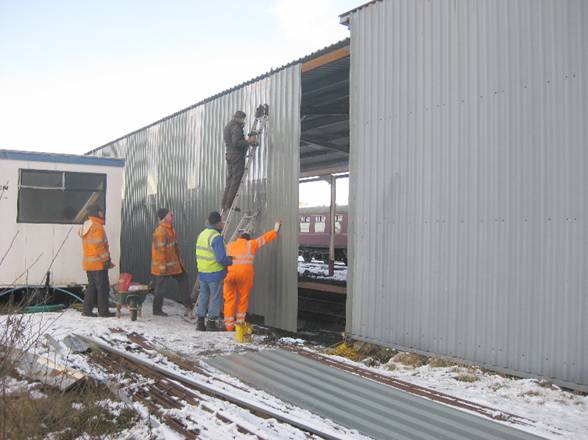
Brave souls
bear the bitter cold so that progress is not interrupted. About one and a half panels remain - they
are seen lying in the foreground in readiness. 7811 – 28 Nov 2010 |
A close up
of the south west corner shows the even though this and the previous image
were taken only a few minutes apart, the final full panel is already in place
leaving less than a half of a panel to instal – and even this was probably
completed before darkness fell. 7812 – 28 Nov 2010 |
Progress
into the New Year (updated 10 January 2011)
The extension to the top shed has long been a
background task, not in receipt of formal funding, and has therefore made
little progress in the flurry of funded activity until about mid-October
2010. Since then, and not withstanding
Santa Specials and premature snowy weather, visual progress has been rapid,
with the side cladding going up very quickly.
Detail finishing work is likely to take proportionately longer,
especially as improving weather is likely to divert the construction teams onto
other work, but the end is undeniably in sight.
|
On the east
side of the extension, cladding marches rapidly southwards with one and a
half of the six bays covered. It’s
very cold, but, albeit briefly, there’s no snow on the ground. 7872 – 9 Jan 2011 |
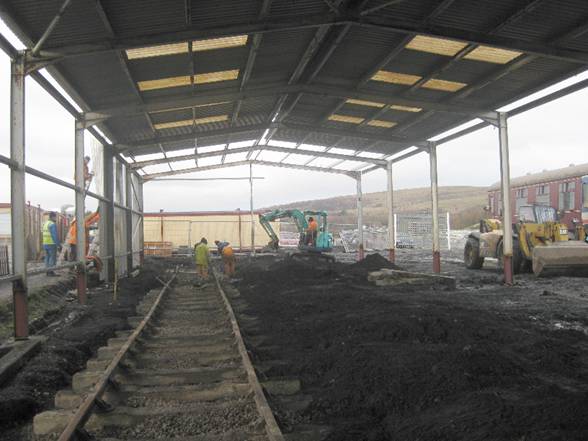
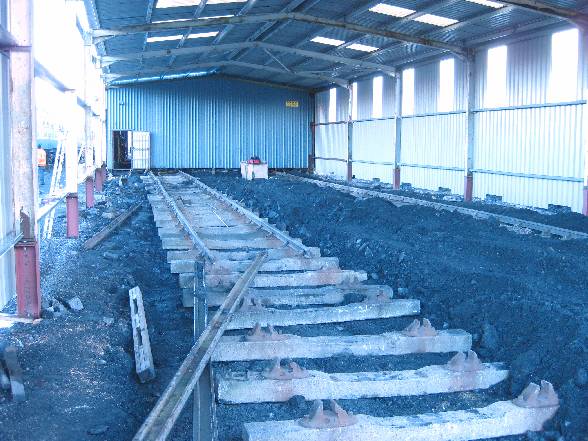
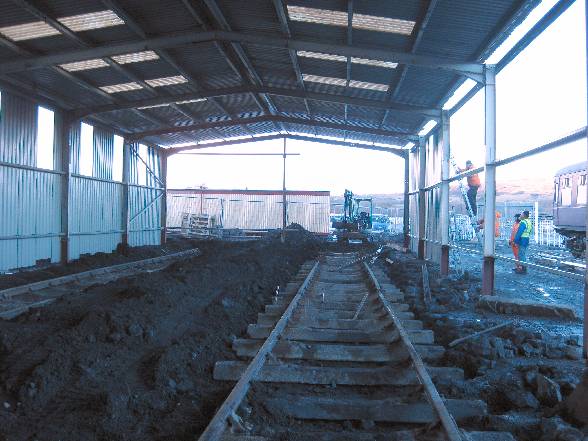
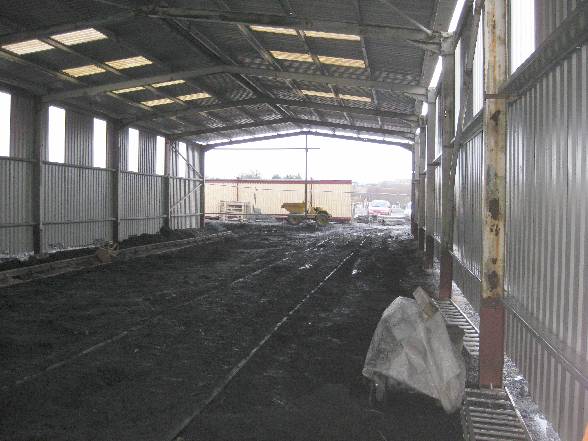
Inside we
see the second line of rails is very roughly laid. The existing colliery spoil will be used to
stabilize the sleepers. It’s not as
good as limestone ballast, but is available, cheap, drains reasonably well,
and was good enough for the NCB throughout its existence. In the far corner, the narrow gap, shown in
the image above this one, has now been sealed which keeps out much of the
wind. 7873 – 9 Jan 2011 |
|
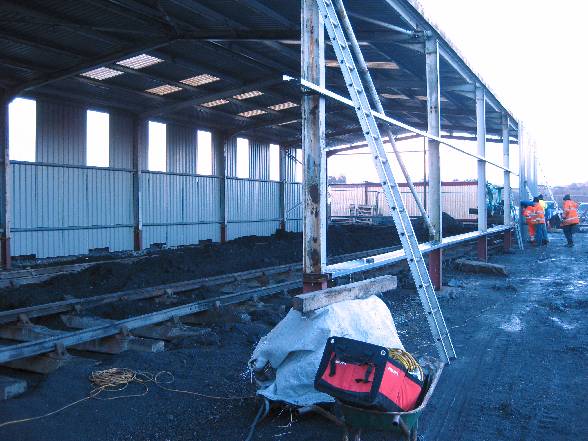
Taken from
the diametrically opposed viewpoint from that above, the extent of the colliery
spoil can be easily seen. Just how
much will be needed is very difficult to quantify, but once the rails are
down and the side and sheets up and fitted, it will be rather difficult to
change the situation 7875 – 9 Jan 2011 |
7877 – 9 Jan 2011 |
Update
for
Sunday saw the side walls of the extension completed,
so that visually the extension now resembles the planned final product quite
closely. However, like so many things of
this type, much of the detail work will require considerable labour, both
physical and in planning terms. The next
job will be to fit internal guttering on the east side, but thought must be
given to how the guttering is to be drained. Thought must also be given to how
the skirts of the sidewalls are to be treated, though a dwarf wall would seem
to be the obvious choice. Finally, of
course, the end wall must be fitted, and since we have a large roller shutter
door, just how it is to fitted, to the end wall. The plan is that the east road can be
extended through the shed. However it
now transpires that the tea room will be in way and must be at least rotated,
if not shifted wholesale. All of these
are soluble problems, and the advantages that extended covered accommodation
will bring will make it all worthwhile
|
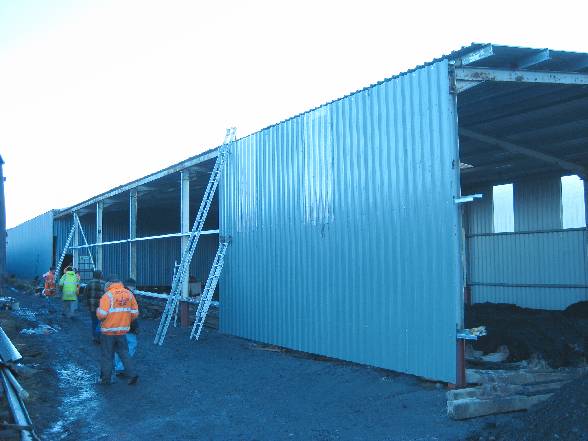
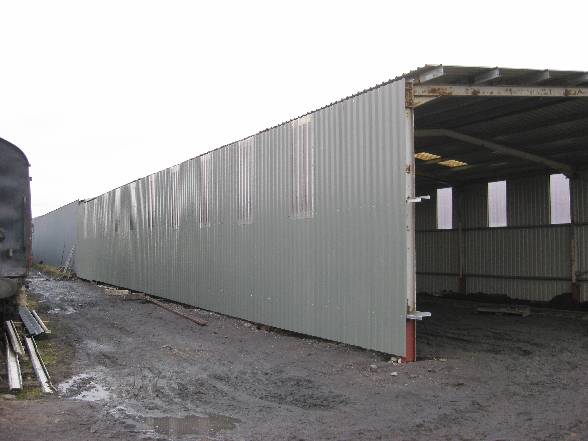
Both east
and west side walls are now complete, and this view of the east wall (albeit
distorted by the inevitable fringing that digital images produce) shows that
the job is closer to the end than to the beginning. Unfortunately that the side ‘lights’ do not show up well
inn this image. 7973 – |
Peeping
down into the south-east corner, we can see the gap between the roof and the
side wall, which will shortly be occupied by the ‘internal’ gutter, and the
gap between the end wall of the original building and the new extension roof
which will be filled with suitably profiled fashion. 7975 – |
|
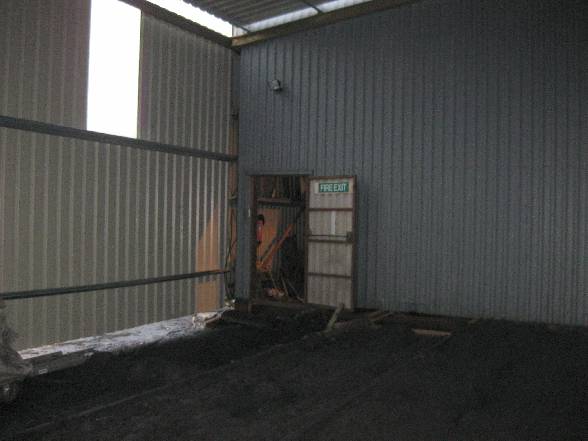
On the
other hand, looking into the south west corner we can see that everything is
now watertight and windproof – except, perhaps, round the ankles 7976 – |
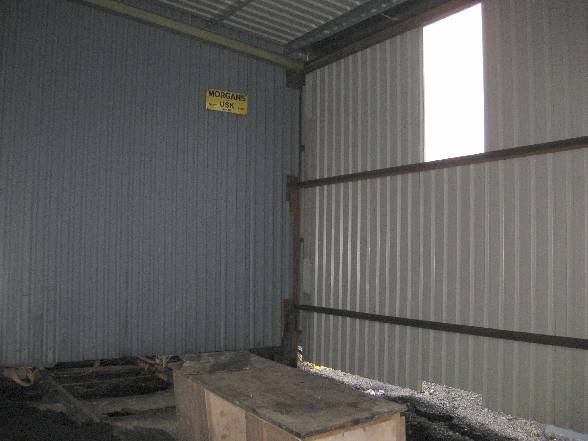
Looking
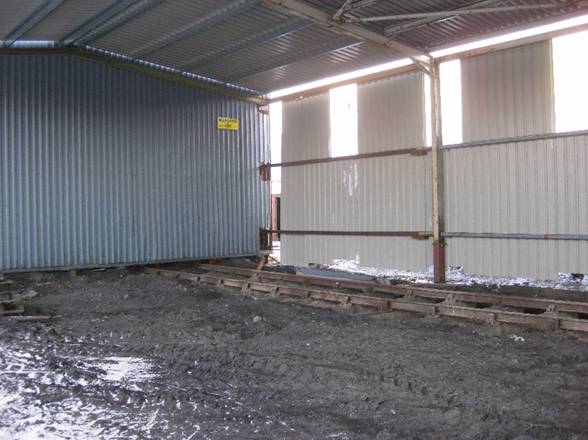
north it is possible to see that the colliery waste is now better distributed. There remains work to do on the west side,
but this needs some of the material to drain and dry out before much further
work can be done. 7977 – |
Click
HERE to return to Main Development page